
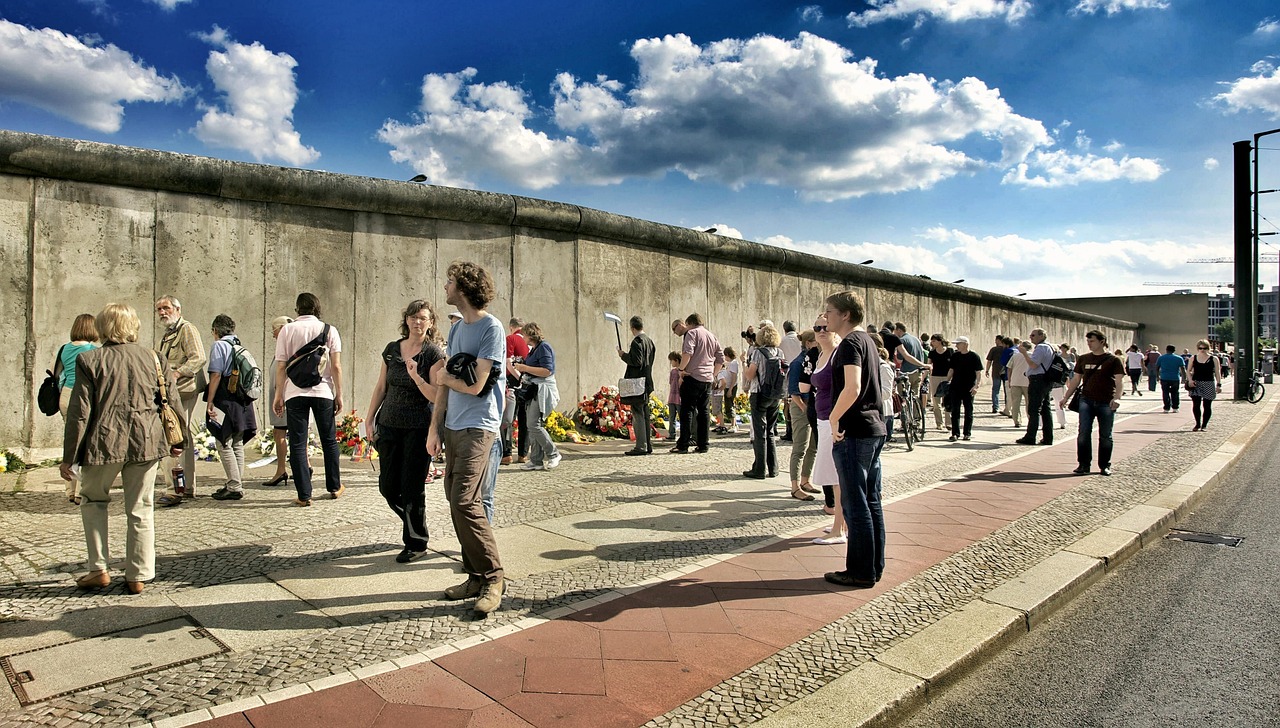
How the Wall Changed My Life
by Heike Kesel – Contemporary Witness
November 9 — Today, the world remembers the Fall of the Berlin Wall — a moment that changed history and symbolized the end of decades of division. For many, it was a day of joy and reunification. But for others, it reopened wounds that had never truly healed.
Heike Kretschmer, a contemporary witness who immigrated to Canada more than thirty years ago, shares her deeply personal story of how the Wall shaped — and scarred — her family’s life. Her reflection, “How the Wall Changed My Life,” reminds us that behind every historical event lie countless private stories of loss, endurance, and the search for belonging.
How the Wall Changed My Life
Fifty years and six days ago, a wall was built to divide East and West Germany. My mother, father, and I were on the western side. My sister, grandmother, grandfather, and the rest of our extended family — aunts, uncles, cousins, and great-grandparents — remained on the other side. The other side — where they lived under Russian occupation in what became the westernmost outpost of the Warsaw Pact during the long, cold years of the Cold War.
Atomic weapons stood ready on both sides, waiting for the moment when either East or West might feel threatened enough to strike. Everyone sensed that the wall was coming. My parents had even devised a desperate plan to rescue my sister Beate — through a fake appendectomy in a hospital in Koblenz, safely in the West. But Beate, just fourteen years old, refused. She chose to stay in the Eastern Zone.
On August 13, 1961, our family was torn apart.
My mother carried guilt for the rest of her life, believing she had caused her daughter’s separation. My father worked endlessly to support relatives in the East, and I — the child who stayed — became a living reminder of what they had lost.
One room in our basement was always filled with parcels for “the other side.” Family vacations were spent visiting our relatives in Grieben. During those visits, I was left out, waiting quietly until the allotted twenty-eight days were over.
Beate remained the center of my mother’s heart, even after she married and did not invite my parents to her wedding. Her daughter, Susann, wanted for nothing — every possible gift was sent to the precious grandchild. Beate’s every wish was fulfilled.
I watched and rebelled. I smoked, neglected my homework, and secretly hoped that perhaps I did not belong to this family after all.
The constant giving to the “poor, underprivileged Zoners” never stopped. Years later, my niece even fled East Germany and moved in with my parents, who provided her and her boyfriend — another refugee — with cars, vacations, and a home.
By then, I had moved to Canada.
When the Wall finally came down, I was stunned. I thought everything would change. I believed we could finally be a family again — one that could stay together. But I was wrong. It had been the Wall itself that held us together. When it fell, its broken shards cut through the last fragile threads that connected us.
Still, I tried to keep the ties alive. I continued to support the Griebeners — Beate and her family — even though the Wall no longer existed. Yet somehow, we were still made to feel responsible for every misfortune they faced. Family gatherings became increasingly strained for my parents, who slowly realized how much they had been taken for granted.
Gratitude faded into habit and habit into entitlement. My parents grew old knowing that there would be no loving Beate to care for them. Not even Susann, their grandchild who lived in the same town, found time to help when daily life became difficult.
After a lifetime of giving — of sending gifts, parcels, money, and cars — the once “underprivileged” family could not be bothered to offer a single act of kindness in return.
Beate came to my mother’s funeral, but not to my father’s memorial two years later.
The politicians who built that Wall — for whatever reasons — never stopped to think about people like us. They never considered how their decisions would tear lives apart, quietly and permanently.
For my mother, it meant a lifetime of guilt and grief. For my father, endless work and exhaustion. And for me — a childhood marked by loss, distance, and the lingering ache of a family divided by concrete, ideology, and silence.
When the Wall finally fell, it was too late.
Too late to heal, too late to rebuild, too late to undo what had already been broken beyond repair.


Schreibe einen Kommentar